Smoke damage can be more destructive than the fire itself. Studies show that smoke and soot can spread throughout a property within minutes, embedding into walls, furniture, and HVAC systems, making cleanup far more complex than most homeowners expect.
For those needing Fire and Smoke Cleanup Services North Texas, understanding the different types of smoke damage is critical. Each type behaves differently, reacts uniquely with materials, and requires a specific cleanup method to ensure complete restoration.
Why Smoke Damage Requires Specialized Cleanup
Smoke is not a single substance—it varies depending on what burned, how it burned, and the temperature of the fire. This variation directly impacts how the residue behaves.
Homeowners searching for Fire and Smoke Cleanup Services Near Me often don’t realize that using the wrong cleaning method can worsen the damage. Proper identification of smoke type is essential for effective restoration.
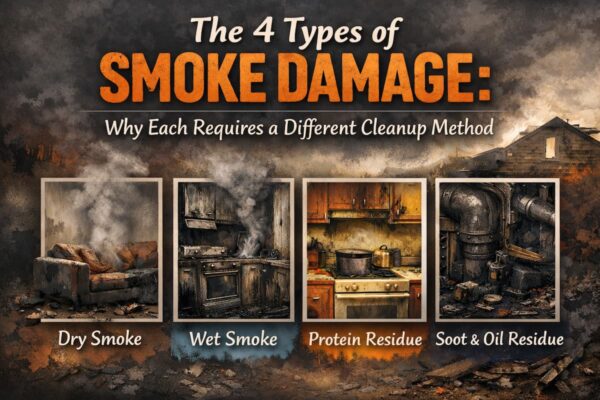
The 4 Types of Smoke Damage Explained
Understanding the four types of smoke damage—dry smoke, wet smoke, protein residue, and fuel oil soot—is the first step toward proper cleanup.
Each type requires a unique approach, which is why professional expertise in Fire Damage Restoration North Texas is so important.
1. Dry Smoke Damage
What Is Dry Smoke?
Dry smoke is created by fast-burning, high-temperature fires involving materials like wood and paper. It produces a fine, powdery residue that spreads easily throughout a property.
Because it is lightweight, dry smoke can travel through small openings and affect multiple rooms.
Cleanup Method for Dry Smoke
Dry smoke is typically removed using specialized vacuuming and dry-cleaning techniques. However, improper cleaning can smear the residue, making it more difficult to remove.
Professional methods ensure surfaces are cleaned without causing additional damage.
2. Wet Smoke Damage
What Is Wet Smoke?
Wet smoke results from low-temperature, smoldering fires involving materials like plastic or rubber. It produces a thick, sticky residue with a strong odor.
This type of smoke adheres to surfaces and is much harder to clean.
Cleanup Method for Wet Smoke
Wet smoke requires aggressive cleaning techniques, including chemical treatments and specialized equipment. The residue penetrates deeply into materials.
Professional restoration is necessary to fully remove contamination and odors.
3. Protein Smoke Residue
What Is Protein Smoke?
Protein smoke is caused by burning organic materials such as food. It is often invisible but leaves behind a strong, persistent odor.
This type of smoke can discolor surfaces and spread throughout the property.
Cleanup Method for Protein Smoke
Cleaning protein smoke requires advanced deodorization and surface treatment. Standard cleaning methods are often ineffective.
Professionals use specialized solutions to neutralize odors and restore affected areas.
4. Fuel Oil Soot Damage
What Is Fuel Oil Soot?
Fuel oil soot is produced by furnace malfunctions or oil-based fires. It creates a dense, greasy residue that spreads quickly through a home.
This type of soot can contaminate HVAC systems and circulate throughout the property.
Cleanup Method for Fuel Oil Soot
Fuel oil soot requires comprehensive cleaning, including HVAC system treatment and deep surface cleaning. The residue is highly adhesive and difficult to remove.
Experts in Fire Damage Restoration North Texas ensure thorough decontamination and restoration.
Why Each Type Requires a Different Approach
Material Sensitivity
Different smoke types interact with materials in unique ways. Some residues sit on surfaces, while others penetrate deeply.
Using the wrong method can damage materials or leave residue behind.
Odor and Residue Complexity
Each type of smoke produces distinct odors and residues that require specific treatments. Proper identification ensures effective cleanup.
This highlights the importance of professional expertise.
Health Risks of Smoke Damage
Airborne Contaminants
Smoke particles can remain suspended in the air, affecting indoor air quality. Prolonged exposure can cause respiratory issues.
Proper cleanup improves air quality and safety.
Toxic Residue
Certain smoke types contain harmful chemicals that can pose health risks. These residues must be removed completely.
Professional services ensure a safe living environment.
The Importance of Professional Cleanup Services
Advanced Equipment and Techniques
Restoration professionals use specialized tools to address different types of smoke damage. This ensures thorough and effective cleanup.
Proper equipment is essential for success.
Comprehensive Restoration Process
Professional services include inspection, cleaning, deodorization, and repairs. This holistic approach ensures your home is fully restored.
Choosing experts in Fire and Smoke Cleanup Services North Texas guarantees better results.
Signs of Smoke Damage in Your Home
Visible Soot and Stains
Dark stains on walls, ceilings, and surfaces are common indicators of smoke damage. These require professional cleaning.
Ignoring them can lead to permanent damage.
Persistent Odors
Lingering smoke odors indicate that residue remains in your home. This is a sign that deeper cleaning is needed.
Professional deodorization is often required.
Preventing Long-Term Smoke Damage
Immediate Response
Acting quickly after a fire helps minimize smoke damage. Prompt cleanup prevents residue from setting into materials.
Quick action reduces restoration costs.
Proper Ventilation and Cleaning
Improving ventilation and using appropriate cleaning methods helps reduce long-term effects. This ensures a healthier indoor environment.
Professional guidance is recommended.
FAQs
- What are the four types of smoke damage?
Dry smoke, wet smoke, protein residue, and fuel oil soot are the main types.
- Can smoke damage be cleaned without professionals?
Minor cases may be manageable, but most require professional restoration.
- How long does smoke cleanup take?
It depends on the extent of damage but typically ranges from a few days to a week.
- Is smoke damage harmful?
Yes, it can affect air quality and pose health risks.
- When should I call a restoration company?
Immediately after a fire to prevent further damage.
Conclusion
Smoke damage is a complex issue that requires specialized knowledge and techniques to address effectively. Each type of smoke behaves differently, making it essential to use the correct cleanup method.
For homeowners in North Texas, understanding these differences can help ensure proper restoration and long-term protection. Acting quickly and relying on professional expertise leads to the best outcomes.
About The Dry Guy
The Dry Guy is a trusted provider of restoration services in North Texas, specializing in fire and smoke damage cleanup. Their experienced team uses advanced equipment and proven techniques to deliver fast, effective, and reliable results.
With a strong commitment to customer satisfaction, The Dry Guy helps homeowners restore their properties and regain peace of mind after fire damage.